



 Home /
 Butterfly Valve vs Ball Valve: How to Choose the Right One


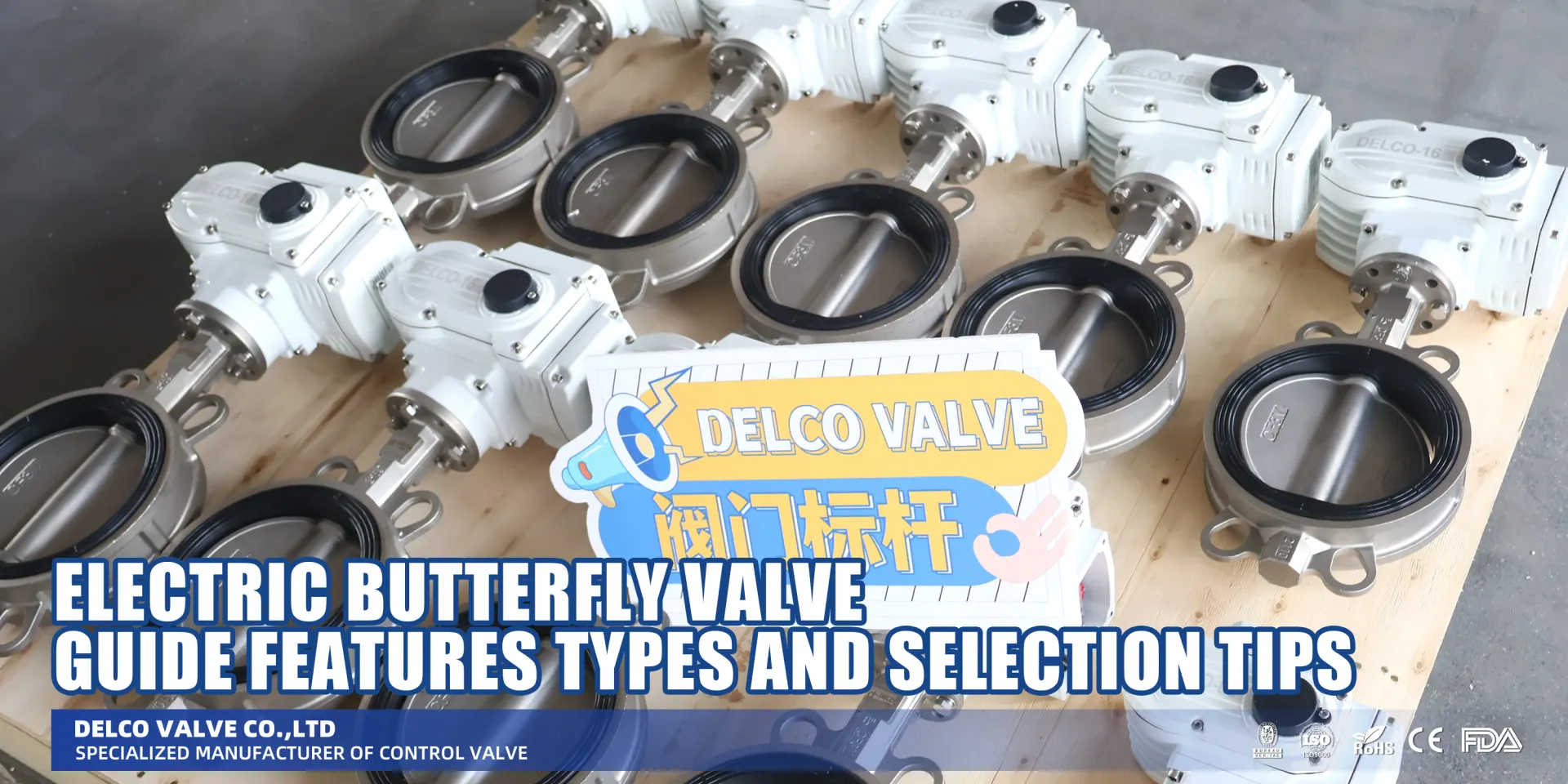
Both are quarter-turn valves. Both can isolate a line in seconds. But pick the wrong one, and you are looking at seat erosion within months, an oversized actuator that busts your budget, or — worst case — a passing valve on a gas line that should have been bubble-tight.
We manufacture both valve types at DELCO, and this guide is the same selection logic our engineers apply when a buyer sends us an inquiry. Below you'll find a head-to-head comparison with real numbers, a Cv calculation example, actuator torque guidance, a 5-year total-cost framework, and lessons from actual projects we've supplied.
Quick Answer: Butterfly vs Ball Valve in 60 Seconds
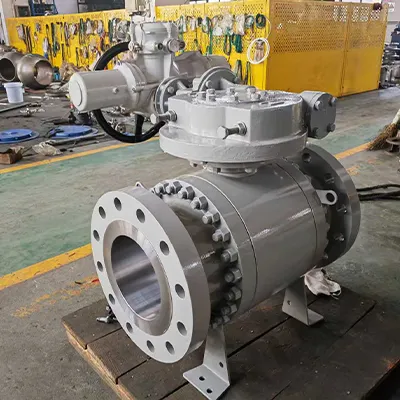
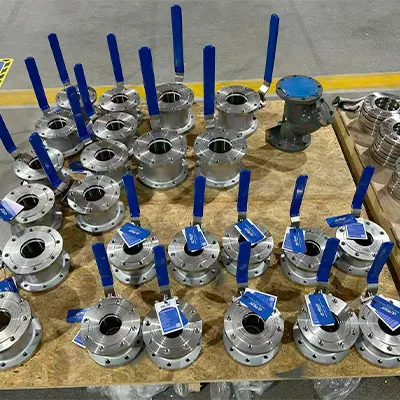
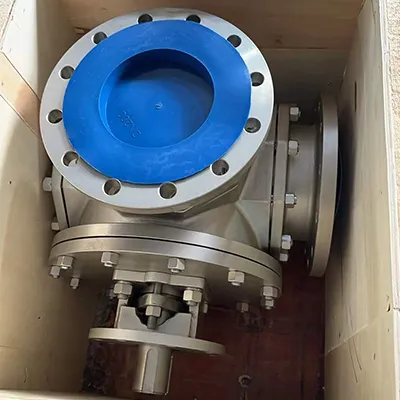
Choose a ball valve when you need bubble-tight shut-off, high pressure, gas service, or small pipe sizes (DN10–DN100). Choose a butterfly valve for large diameters (DN150+), tight budgets, limited space, or water/HVAC service where some throttling is required.
| Factor | Ball Valve | Butterfly Valve |
|---|---|---|
| Sealing | Bubble-tight (Class VI, soft seat) | Good (depends on seat & offset type) |
| Best pressure class | Up to Class 600–2500 (trunnion) | Typically PN16; high-performance up to Class 600 |
| Best size range | DN10–DN150 | DN150–DN2000+ |
| Throttling | Not recommended (V-port excepted) | Yes, 15–70° effective range |
| Weight & space | Heavy, bulky | 2–4× lighter, wafer-thin |
| Relative cost | Higher (grows with size) | Lower, especially DN150+ |
How Each Valve Works
Ball Valve
A bored sphere rotates 90° inside the valve body. When the bore aligns with the pipe, flow passes; rotate a quarter-turn and the solid face of the ball blocks the line, pressing against seats (PTFE, RPTFE, or metal) to seal. Key configurations:
- Floating vs. trunnion-mounted ball — floating balls are pressed against the downstream seat by line pressure (common to DN150); trunnion designs hold the ball on bearings for high-pressure and larger sizes.
- Full port vs. reduced port — a full-port bore matches the pipe ID, so the valve adds virtually no flow restriction. Reduced-port bodies are cheaper but add pressure drop.
Butterfly Valve
A disc mounted on a shaft rotates in the center of the flow path. Parallel to flow = open; perpendicular = closed. Because the disc always stays in the stream, even a fully open butterfly valve creates some obstruction. Three design generations matter for selection:
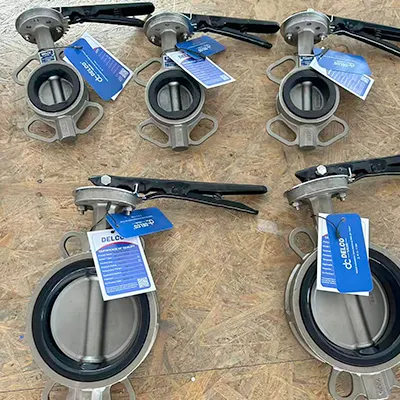
- Concentric (resilient seat) — rubber-lined, cheapest, water service, PN16 territory.
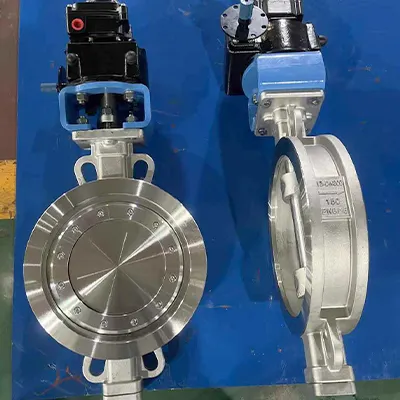
- Double offset — the disc centerline is offset from the seat, reducing seat friction and wear; better cycling life.
- Triple offset — metal-to-metal, cam-action sealing; handles higher temperatures and reaches higher pressure classes with fire-safe options.
For connection styles (wafer vs. lug vs. flanged), see our dedicated guide: [Valve Connection Standards: Wafer vs Lug vs Flange].
Head-to-Head Comparison: 8 Factors That Matter
1. Sealing and Leakage Class
| Valve / Seat Type | Typical Leakage Class (FCI 70-2) |
|---|---|
| Ball valve, soft seat (PTFE/RPTFE) | Class VI — bubble-tight |
| Ball valve, metal seat | Class V |
| Butterfly, concentric soft seat | Class VI when new; degrades with wear |
| Butterfly, triple offset metal seat | Class V–VI |
Ball valves win on long-term sealing integrity: the ball presses uniformly against the seat on every stroke. A new concentric butterfly can also test at Class VI, but seat wear, thermal cycling, and pipeline alignment affect it faster. For gas and hazardous media, most specifications demand a ball valve or a triple-offset butterfly.
2. Pressure and Temperature Limits
| Condition | Ball Valve | Butterfly Valve |
|---|---|---|
| Soft seat temp. limit | ~200°C (PTFE) | 120°C (EPDM), 150–200°C (PTFE) |
| Metal seat temp. limit | ~400–550°C | Triple offset: up to ~500°C+ (design-dependent) |
| Pressure class | Floating to Class 600; trunnion to Class 2500 | Concentric PN16; double/triple offset to Class 300–600 |
3. Flow Capacity (Cv/Kv) — and How to Actually Use It
This is where most comparison guides stop short. Valve datasheets give you a flow coefficient (Kv in metric, Cv in US units; Cv ≈ 1.16 × Kv). Typical values for DN100:
| DN100 Valve | Typical Kv (fully open) |
|---|---|
| Full-port ball valve | ~380–450 |
| Concentric butterfly valve | ~220–300 |
A 3-step worked example — you need 100 m³/h of water and want to keep the valve's permanent pressure loss ≤ 0.1 bar:
- Required Kv = Q / √ΔP = 100 / √0.1 ≈ 316
- A DN100 full-port ball valve (Kv ≈ 400) passes with margin.
- A DN100 concentric butterfly (Kv ≈ 270) is undersized — you'd either accept a larger ΔP, or step up one size.
That single calculation frequently decides the valve — yet almost no comparison article walks through it.
4. Throttling and Modulating Control
- Butterfly valves throttle acceptably in the 15–70° disc-angle range. Below ~15°, flow control is unstable.
- Standard ball valves should not throttle. The crescent-shaped gap at partial opening accelerates flow and erodes the seat edge. For modulating service, specify a V-port (characterized) ball valve with a positioner.
- Cavitation warning: when throttling liquids at high differential pressure, the disc edge of a butterfly valve is a classic cavitation zone — the local pressure drop flashes the liquid, and collapsing vapor bubbles machine away the disc edge and seat. If you hear gravel-like noise near a throttling valve, it is already happening. Countermeasures: limit the pressure drop across a single valve, install two valves in series (pressure-staged), or select a multi-stage trim control valve.
5. Size, Weight, and Installation
| Pipe Size | Sensible Choice | Why |
|---|---|---|
| DN10–DN50 | Ball valve | Butterfly not practical; similar cost |
| DN50–DN150 | Either | Ball costs more but is acceptable |
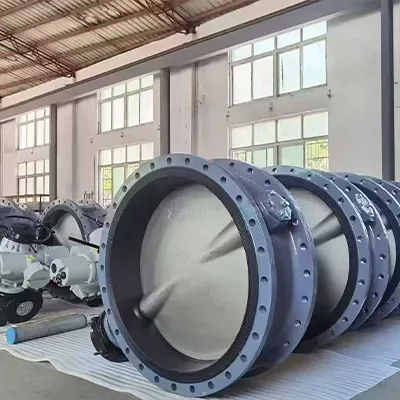
| DN150–DN300 | Butterfly | Ball valve weight & cost climb steeply |
| DN300+ | Butterfly | Ball valve usually not economical |
A wafer butterfly is face-to-face very short and 2–4× lighter — a real constraint-solver for overhead piping and skid modules.
6. Torque and Actuator Sizing (the Hidden Cost Driver)
Typical break torque at DN100:
| DN100 Valve | Typical Break Torque |
|---|---|
| Concentric butterfly | ~30–40 Nm |
| Floating ball valve | ~70–90 Nm |
When you automate, size the actuator at break torque × 1.25–1.5 safety factor (media, deposit build-up, and seat aging all add torque over time). Consequence: the ball valve needs an actuator roughly one frame size larger — often the difference between a compact and a heavy-duty electric actuator, and a 2–3× actuator price gap. This is exactly why DELCO pairs low-torque butterfly valves with compact electric actuators on skid projects.
7. Maintenance and Spare Parts
| Aspect | Butterfly | Ball Valve |
|---|---|---|
| Common failure point | Seat/liner wear, stem seals | Seat wear, packing, ball surface |
| Seat replacement | In-line, 15–30 min, no special tools | Often requires disassembly, 30–60 min |
| Spare seat cost | Low | Moderate |
| Field-repairable | Yes | Yes, more complex |
8. Purchase Price vs. 5-Year Total Cost
Comparing sticker prices is the most common selection mistake. A realistic total cost of ownership (TCO) model:
TCO = purchase price + actuator + spare parts + maintenance labor + downtime risk + pumping energy from permanent pressure drop
Illustrative example — DN150 isolation valve on a chilled-water loop, 5-year horizon:
| Cost Element | Butterfly + Electric Actuator | Ball Valve + Electric Actuator |
|---|---|---|
| Valve + actuator (illustrative) | $900 | $2,400 |
| Spare seats over 5 yrs | ~$120 | ~$180 |
| ΔP energy penalty | Slightly higher (disc in stream) | Lower (full port) |
| Verdict | Wins on capex & weight | Wins where zero-leak & longevity pay back |
Large-diameter utility loops almost always favor the butterfly; critical isolation points justify the ball valve. Run the numbers for your own duty before deciding — or send them to us and we'll do it with you.
Which Valve for Your Application? Verdict by Industry
| Application | Verdict | Key Reason |
|---|---|---|
| Water & wastewater | Butterfly (ball for dosing lines) | Large diameters, throttling, cost |
| HVAC / district cooling | Butterfly | Low ΔP water, compact, automation-friendly |
| Oil & gas / LNG | Ball valve (+ fire-safe) | Zero-leak on hydrocarbons, Class 300+ |
| Chemical & petrochemical | Ball valve (PTFE-lined) | Corrosion + fugitive-emission rules |
| Mining & slurry | Neither — knife gate / pinch | Solids destroy both discs and seats |
| Desalination | Butterfly (duplex/Super Duplex) | Large low-pressure lines; corrosion alloys |
| Food & pharma | Butterfly (sanitary) or ball (sterile) | CIP/SIP cleanability; zero-dead-volume |
What Most Guides Won't Tell You
Water Hammer When Closing Large Butterfly Valves
Slamming a large butterfly (or any quarter-turn valve) shut on a moving water column generates a pressure spike that can crack pipe and valve castings. On DN200+ water lines, specify actuators with adjustable closing speed (or two-speed "fast-slow" closing) rather than a standard on/off actuator.
Fire-Safe and Fugitive Emission Requirements
If your spec sheet mentions API 607 / API 6FA / ISO 10497 (fire-safe test) or ISO 15848-2 / TA-Luft (fugitive emissions), soft-seated concentric butterflies are usually eliminated. Fire-safe certified ball valves and triple-offset butterflies with graphite seals are the standard answers. In EU chemical plants, TA-Luft compliance is now routinely checked by inspectors — it should be a selection gate, not an afterthought. On the actuator side, hazardous areas add ATEX/IECEx requirements for electric actuators — check both the valve and the actuator certification.
5 Field Signs You Picked the Wrong Valve
- Gravel noise near a throttling valve — cavitation; the valve (or the ΔP) is wrong.
- Disc chatter/vibration at small opening angles — throttling below the stable range; add a regulator or change trim.
- Actuator overload trips after some years — seat aging or scale build-up raised break torque; safety factor was too thin.
- Passing (internal leakage) on a soft-seated ball valve in throttling duty — seat edge eroded; never throttle a standard ball.
- Liner bulging or cracking on a butterfly in hot service — seat material over its temperature class (e.g., EPDM above ~120°C).
Vacuum, Bi-directional, and Pigging Service
- Pigging requires a full-port ball valve — anything else traps the pig.
- Vacuum service favors ball valves — atmospheric pressure seats the ball harder; butterfly disc loading reverses.
- Dead-end service at line end: lug-style or double-flanged butterfly, or a ball valve; a bare wafer in a dead-end can deform.
Real Project References
These are projects DELCO has supplied — the selection logic above, applied:
1. HVAC Chilled-Water Systems Across Australia — Electric Butterfly Valves. Multiple building cooling loops needed compact, automatable isolation on water service with modest ΔP. Wafer electric butterfly valves with compact actuators minimized panel space and energy use — classic butterfly territory. [Read the case]
2. Water Treatment Plant, Malaysia — Electric Flanged PVC Butterfly Valve. Corrosive water chemistry ruled out metal bodies on parts of the plant; a PVC flanged electric butterfly handled isolation duty where pressure and temperature were low — media compatibility drove the choice, not pressure class. [Read the case]
3. Power Plant Flue Gas Duct, Mongolia — DN250 Electric Ventilation Butterfly Valve. A large, low-pressure air/gas stream at moderate temperature: exactly the duty where a DN250 ball valve would have been needlessly heavy and expensive. [Read the case]
Selection Checklist: 10 Questions Before You Order
- Media (clean water / gas / slurry / corrosive)?
- Operating pressure & required pressure class?
- Temperature range (peak, not average)?
- Pipe size (DN/NPS)?
- Duty: pure isolation, or throttling/modulating?
- Required leakage class — is Class VI contractual?
- Fire-safe / fugitive-emission / ATEX requirements in the spec?
- Cavitation risk (high ΔP liquid throttling)?
- Installation space, weight limits, pipe supports?
- Actuation: manual, electric, or pneumatic — and 5-year cost, not sticker price?
If you can answer these ten, the right valve is usually obvious. If any answer is uncertain, that's exactly what our engineering team does all day.
FAQ
Is a butterfly valve or ball valve better for water? For large water lines (DN150+) a butterfly valve is lighter and cheaper with enough sealing. For small lines, high pressure, or zero-leak requirements, use a ball valve.
Can a butterfly valve seal as tight as a ball valve? A new concentric soft-seated butterfly can pass Class VI tests, but ball valves hold that tightness longer under cycling and temperature swings. For gas, specify a ball valve or triple-offset butterfly.
Which is cheaper: butterfly or ball valve? Small sizes are comparable. From about DN150 up, butterfly valves typically cost 30–50% less, and the gap widens with size. But compare 5-year total cost, not purchase price.
Can I use a ball valve for throttling? Not a standard one — partial opening erodes the seat. For modulating service, use a V-port ball valve or a globe-style control valve with a positioner.
Which valve is better for gas service? Ball valve. Gas leaks through seat imperfections far more readily than liquids, so bubble-tight shutoff is non-negotiable; fire-safe certification is often required too.
Butterfly vs ball valve for slurries? Neither is ideal — solids lodge in the cavity and grind seats. Knife gate valves or pinch valves are the correct answer for slurry and tailings. See our Pinch Valve vs. Knife Gate Valve: Which is Best for Mine Tailings?
Send us your service conditions — media, pressure, pipe size, temperature — and our engineers will reply with a specific valve recommendation and quotation within 24 hours. Explore our electric butterfly valves, ball valves, and valve actuators.
Share on Social:


